


Dog Harnesses: The Easy K9 Harness Handbook
- Sabrina Seva
- Jul 7, 2025
- 3 min read

Whether leash-training a new puppy or managing a strong, full-grown dog, finding the right training tools can make all the difference, including harnesses. In today’s blog post, we’ll take a closer look at dog harnesses and whether they are right for your dog.
What Is a Dog Harness?
A dog training harness is a piece of equipment that fits around your dog’s chest and shoulders, rather than the neck. It distributes pressure across the body, making it a safer, escape-proof, and more effective alternative (to traditional collars) for many dogs, especially if:
Pulling is a problem.
You have smaller dogs (like Yorkies or Chihuahuas).
You have reactive dogs, or
Your pup has respiratory sensitivities (think French Bulldogs or Boston Terriers).
ICYMI: Dog Reactivity and How to Help Your Urban Pup
Below are the five most popular harnesses, along with their pros and cons.
Front-clip: Leash attaches at the chest to redirect a dog’s pulling behavior by turning them back toward the walker. Often referred to as “no-pull” or “anti-pull” harnesses, they are designed for teaching loose-leash walking. Note: The harness alone won’t “fix” pulling without consistent and positive reinforcement training.
Pros: Best for leash-pullers as it provides more control and redirects the dog’s movement towards the handler, discouraging pulling.
Cons: May cause discomfort for sensitive dogs. May tangle under the dog's front legs.
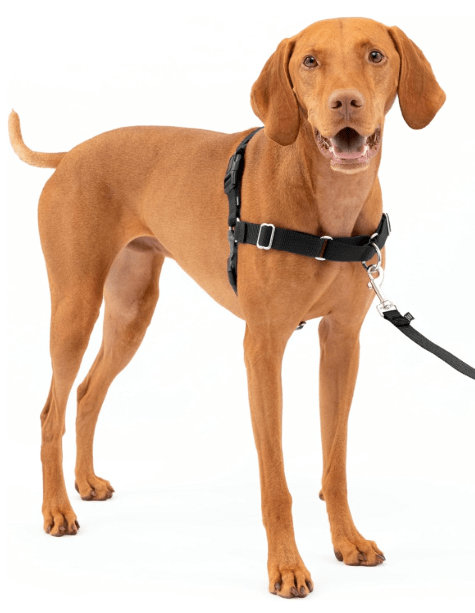
A Front-Clip, No-Pull Dog Harness (Courtesy: Amazon.com) (PetMD: How to Choose and Fit a No-Pull Dog Harness)
Back-clip: The leash attaches at the dog’s back.
Pros: Ideal for calm walkers or small breeds.
Cons: Less control for dogs who like to pull.
Dual-clip: A combination of the front-clip and back-clip for flexibility and versatility.
Pros: Versatile for different situations and K9 behaviors.
Cons: May be more complex to adjust and less comfortable for some dogs.
Step-in: Dogs can step into the harness with the straps around the body.
Pros: Easier for dogs who dislike the harness over their head.
Cons: May require further adjustment to find the optimal fit.

Vest style: Features a broad, vest-like design covering more of the chest and body with thicker and durable padding and broader straps.
Pros: Offer comfort and control for everyday walks, hikes and agility training.
Cons: The extra coverage may cause the dog to overheat. It may not be easy to fit on some dogs properly.

Dog Vest Harness with Front-Clip (Courtesy: Amazon.com) AKC: Choosing the Right Harness for Your Dog
Choosing a Harness: 3 Things to Consider
Regardless of which dog harness you choose for your dog, always ensure the harness fits properly to prevent discomfort, chafing, slipping, neck pressure, or injury! Always select a harness made of high-quality materials.
Carefully choose a harness that complements your dog’s size, breed, and temperament. Note: Never have your dog wear his harness 24/7.
Consult with your veterinarian, dog trainer, dog walker, or other dog professional to determine and select the best harness for your dog and your training goals.
New York Times: The Best Dog Harnesses of 2025
Final Thoughts
Keep in mind that a single dog training tool does not fix every issue for every dog. Even the best training (and tools) must take into account the dog’s size, breed, and temperament for optimal results. Sometimes, a variety of training tools can be used to achieve the desired results in different situations. And remember, always pair your harness (or other training tool) with positive reinforcement training, such as treats, praise, and patience.
Do you have questions about dog harnesses and whether one is right for your dog?
Reach out to us for assistance!

South Philadelphia’s PANT DOG CENTER!
Dog Training ~ Dog Daycare ~ Dog Walking
CALL: 215-837-2997.
EMAIL: Contact@PantDogCenter.com today!
FOLLOW US on Facebook and Instagram, too!


Comments